Turin in a Day
One fast hour west, Italy’s first capital runs the world’s most important Egyptian collection outside Cairo, a shroud you almost certainly won’t see, a temple to cinema with a glass lift — and a drink invented for exactly this town’s weather.
The short version
- Frecciarossa services run Milan to Turin’s Porta Susa and Porta Nuova in about an hour — trenitalia.com — at fast-train fares that reward advance booking, with the grid-planned center walkable from either station.
- The Museo Egizio’s claim per the alarm is the standing consensus: the most important Egyptian collection outside Cairo — founded 1824, rebuilt as a modern museum — with the tomb of Kha’s complete grave goods and the statuary gallery as anchors; around €18, booked ahead for weekends at museoegizio.it.
- The Shroud honesty per the alarm: the cloth is displayed publicly only in rare, announced expositions years apart — between them, the Duomo’s chapel holds the sealed case, the story, and a full-scale replica for study, and that visit is the honest product.
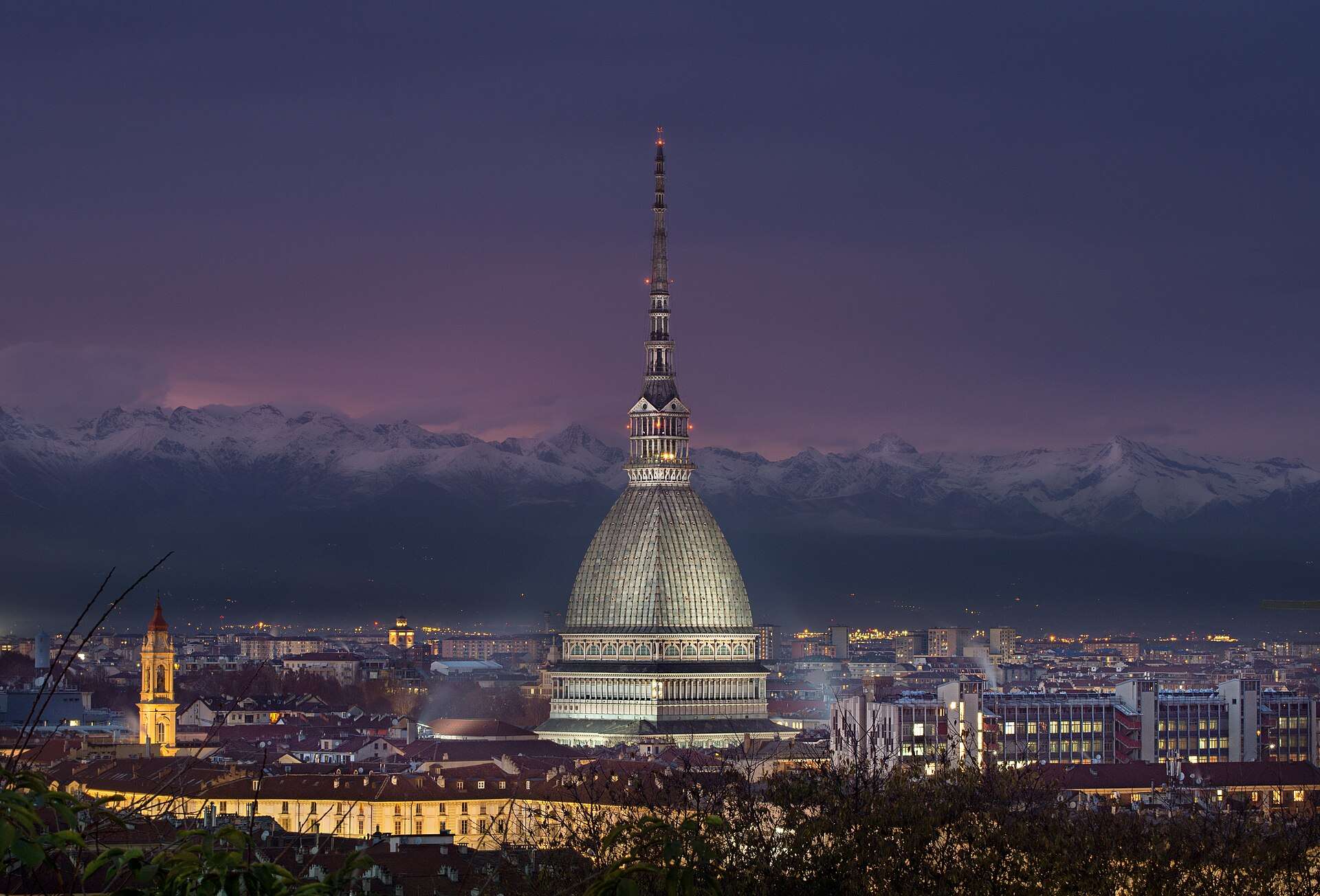
- The Mole Antonelliana — the city’s spired silhouette — houses the National Cinema Museum with its glass panoramic lift rising through the dome to the terrace: museum and view ticketed separately or together, both booked on weekends.
- Turin’s royal-and-first-capital layer runs the center: Italy’s unification started here (first capital, 1861), with the Palazzo Reale complex, the Savoy residences’ UNESCO listing, and Piazza San Carlo’s twin churches setting the Baroque register.
- The café canon per the alarm: bicerin — espresso, chocolate, and cream layered in a glass — poured at its birthplace café (operating since the 1760s) and across the historic rooms; gianduja chocolate is the city’s invention, aperitivo culture claims local origin, and some 18 kilometers of porticoes make the whole itinerary rainproof by design.
Getting there
The fast hour makes Turin Milan’s easiest big-city add — book the train seats and the Egizio slot in the same sitting per the alarm’s weekend clause, and the day plans itself. Porta Nuova lands closest to the café-and-museum core. The city’s grid (Roman bones, Baroque dress) walks logically under its arcades; trams cover the tired. The rain clause is real climate advice: Turin’s weather built the porticoes, and a wet forecast cancels nothing here.
The day
Egizio first at your booked slot: two hours minimum for the statuary hall’s granite crowd (Ramesses II presiding), the tomb of Kha’s complete domestic afterlife — furniture, bread, cosmetics, the couple’s actual linens — and the papyrus collection’s quiet superlatives. Emerge for the bicerin rite per the alarm: the layered glass taken unstirred at a marble table where the recipe was born. The afternoon splits the city’s registers: the Duomo’s Shroud chapel with expectations pre-straightened — the case, the replica, the science-and-faith presentation handled respectfully — then the Mole’s glass lift through the cinema museum’s dome for the Alps-to-Po panorama. Royal Turin fills remaining hours (Palazzo Reale’s armory outstanding), Piazza San Carlo pours the aperitivo at the historic cafés’ terraces, and the gianduja errand at a chocolatier closes the eating file. The evening Frecciarossa home runs against the mountain skyline the city keeps on its western edge.
When to go
Turin runs year-round on the porticoes’ promise — rain and winter cost the visit nothing but the terrace seats, per the alarm’s built-for-it clause. Autumn adds white-truffle season radiating from nearby Alba (restaurant menus notice loudly); winter suits the cafés’ velvet rooms; spring and summer open the Po’s riverside and the hill viewpoints. The Egizio’s weekend crowds are the one constant to book around, and any announced Shroud exposition — a years-apart event — reorganizes the city entirely for its dates, with pilgrim-scale planning to match.
Frequently Asked Questions
Is the Egyptian Museum really that good?
By scholarly standing and visitor consensus, yes — the collection’s depth (the Kha tomb group above all) and the modern rebuild put it in the world tier the alarm claims. Egypt-in-Italy is a Savoy-collecting story the museum tells plainly. Two hours is a floor; enthusiasts lose four.
What will I actually see regarding the Shroud?
The chapel, the sealed case that holds the folded cloth, a faithful full-scale replica, and the presentation of the object’s history and the scientific debate — all respectfully staged. The cloth itself shows only in rare announced expositions, per the alarm. Treat the visit as story-and-place and it satisfies; expect the relic and it can’t.
What exactly is bicerin?
Espresso, thick chocolate, and cold cream layered — not stirred — in a small glass, invented in 18th-century Turin and consumed as ritual: drink through the layers and let them mix on their own schedule. The birthplace café pours the canonical version in a tiny marble room; arriving early beats the queue for its dozen seats.
Is Turin worth it against Milan’s own sights?
As a contrast day, strongly — Turin runs quieter, more uniformly elegant, and museum-for-museum punches above its fame; the Egizio alone has no Milanese answer. It’s the connoisseur’s Northern city precisely because the crowds haven’t priced it. The fast hour makes the experiment cheap.
Turin or Lake Como from Milan?
Como (documented on this network) for the lake’s villa-and-ferry day; Turin for museums, cafés, and urban Baroque. Weather is the fair tiebreaker — Como wants sun, while Turin, per the alarm, was architecturally designed for the other forecast.