Bergamo’s Upper Town
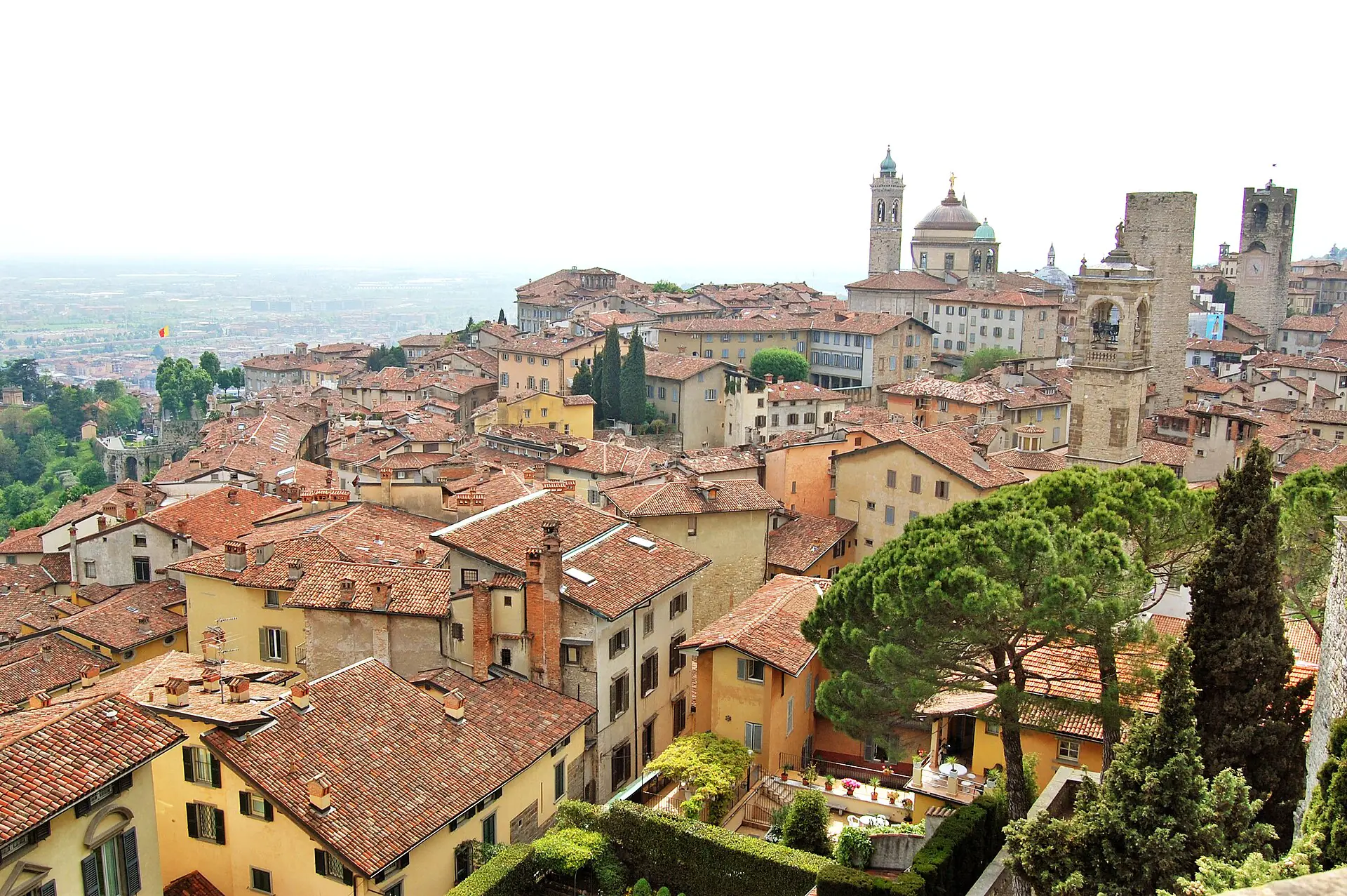
Everyone flies over Bergamo to reach Milan; almost nobody rides the 50 minutes back to see it. The walled upper city on its hill is the region’s best-kept obvious secret.
The short version
- Regional trains run Milan to Bergamo in about 50 minutes for a small fare, roughly hourly from Centrale and Porta Garibaldi; times at trenitalia.com.
- From Bergamo station, bus and the lower funicular station connect on one transit ticket — the funicular’s short haul through the walls is the correct arrival and the city’s favorite machine.
- Piazza Vecchia — Renaissance square, medieval tower, white Palladian library — drew Le Corbusier’s flat statement that nothing could be added or removed; the campanone still rings 100 strokes at 10pm, the old curfew.
- The Colleoni Chapel’s pink-and-white marble front is Lombard Renaissance at full volume, built by a mercenary captain as his own mausoleum; the basilica beside it hides Donizetti’s tomb.
- The Venetian walls — four kilometers of 16th-century ramparts, UNESCO-listed — ring the upper city with a promenade over the plain toward Milan.
- Polenta e osei, the town’s sponge-cake-and-marzipan dessert shaped like polenta with birds, appears in every pastry window; the savory original appears at lunch.

Getting there
Trains from Centrale and Garibaldi make Bergamo an unbooked, unplanned 50 minutes — validate and board. At Bergamo station, the ATB transit ticket covers the bus to the lower funicular station and the funicular itself: three minutes through the wall and you step out inside Città Alta. The airport’s proximity is the town’s running joke — millions land at Orio al Serio yearly for Milan and skip the walled city ten minutes away. Riding out from Milan reverses the joke in your favor.
The day
Off the funicular, let the Via Gombito’s stone channel pull you to Piazza Vecchia and take the square slowly — café table, tower climb for the roofline, the library’s calm. The Colleoni Chapel and Santa Maria Maggiore next door concentrate the art history into one corner; Donizetti’s tomb and the basilica’s tapestries hold the quiet notes. Lunch on casoncelli — Bergamo’s stuffed pasta — with the local Valcalepio. The afternoon walks the Venetian walls’ circuit as far as appetite carries, with the San Vigilio funicular (the second, smaller one) lifting the committed to the castle viewpoint above everything. Aperitivo on the walls at golden hour, then the funicular-bus-train sequence home.
When to go
Spring and early autumn give the walls their walking weather and the plain its clarity — on the sharpest days the Alps stand behind the towers. Summer is warmer but the upper city’s stone lanes shade well; evening passeggiata season is its best hour. Winter fog swallows the plain and turns Città Alta into an island above the clouds — a local specialty worth catching if the forecast hints. Milan’s fashion-week and fair crowds never make it here, which is the standing advantage.
Frequently Asked Questions
Is Bergamo worth it against Como or Verona?
Different genre: Como is lake scenery, Verona is romance commerce, Bergamo is an intact hill city with a fraction of either’s tourists. For texture against crowd it wins the region outright.
Which funicular is which?
The main one connects lower to upper city and runs on the transit ticket; the San Vigilio line continues higher to the castle hill. Ride the first always, the second for the view-completists.
What’s the food obligation?
Casoncelli alla bergamasca — pasta stuffed with meat and amaretti, dressed in butter, sage, and pancetta — plus the polenta e osei dessert for the window photo at minimum. This is a serious eating town in a quiet way.
Can I do Bergamo from the airport?
Landing at Orio al Serio, the upper city is 15 minutes away — the best layover upgrade in Italy. A five-hour connection converts to a walls-and-lunch visit with room to spare.
Città Bassa — anything worth descending for?
The Accademia Carrara’s picture gallery is the genuine reason — Botticelli to Bellini, steps below the walls. Otherwise the alarm stands: the hill is the trip.